Scope of application
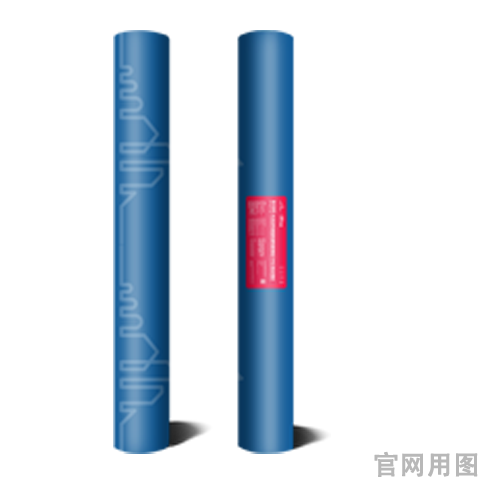
Scope of application: widely used in industrial and civil building roof waterproofing engineering, recommended products for photovoltaic energy single-layer roof waterproofing system.
Product specifications
Model
|
Thickness(mm)
|
Wide(m)
|
Length(m)
|
Lap edges
|
Execution standards
|
H-type (average material)
|
1.5、1.8
|
2.0
|
20
|
weld
|
GB27789-2011
|
Type P (fabric reinforced)
|
1.5、1.8、2.0
|
Product specification
1.Selected brand polymer raw materials, and improvedweather-proof formulas�;�;�;�;
2.Excellent physical properties, and resistance totensile & tear and wind uplift�;�;�;�;
3.Resistant to chemicals�;�;�;�;
4.Extremely high light reflectivity (design value > 87%);UV resistance; effects in reducing room temperature and power consumption; mitigate urban heat islandeffect�;�;�;�;
5.The measured time to failure caused by artificial weather aging is longer than 12,000 H�;�;�;�;
6.FM certification: Tested to the most stringent US/international standards.
Technical indicators
Executive standard: GB27789-2011 "Thermoplastic polyolefin (TPO) waterproofing membrane"
|
Serial number
|
project
|
index
|
|
H
|
P
|
|
1
|
The thickness of the resin layer on the intermediate tire base/mm≥
|
-
|
0.40
|
|
2
|
Tensile properties
|
Maximum pull/(N/cm) ≥
|
-
|
250
|
|
Tensile strength/MPa ≥
|
12.0
|
-
|
|
Elongation at maximum pull/% ≥
|
-
|
15
|
|
Elongation at break/% ≥
|
500
|
-
|
|
3
|
Low temperature bending
|
-40°C without cracks
|
|
4
|
Seam peel strength/(N/mm) ≥
|
4.0 or coil destruction
|
3.0
|
|
5
|
Right angle tear strength/(N/mm) ≥
|
60
|
-
|
|
6
|
Artificial climate accelerates aging
|
Time/h
|
More than 5000
|
|
Appearance
|
No blistering, cracks, delamination, bonding and holes
|
|
Maximum pull retention/%≥
|
-
|
90
|
|
Tensile strength retention/%≥
|
90
|
-
|
|
Elongation retention at maximum pull/%≥
|
-
|
90
|
|
Elongation at break retention/%≥
|
90
|
-
|
|
Low temperature bending
|
-40°C without cracks
|
Construction steps
Mechanical fixing method: Clean up the substrate layer >> Pave the vapor barrier >> Pave the insulation board >> Pave the waterproof coiled materials >> Fix the waterproof coiled material >> Do overlapping >> Strengthen the nodes >> Do a self-inspection and organize acceptance
 BB视讯
BB视讯
 BB视讯旗下站点